Cultivating spaces for all people to flourish where we live, learn, work and worship
Proper 14A: An Ally for Joseph
“In a time of so much political darkness, hope is a glimpse of resurrection light...Hope is the Church becoming a place where LGBTQ+ people are centered, listened to, and loved.”1 ~ Rev. Dr. Joelle Henneman
Context
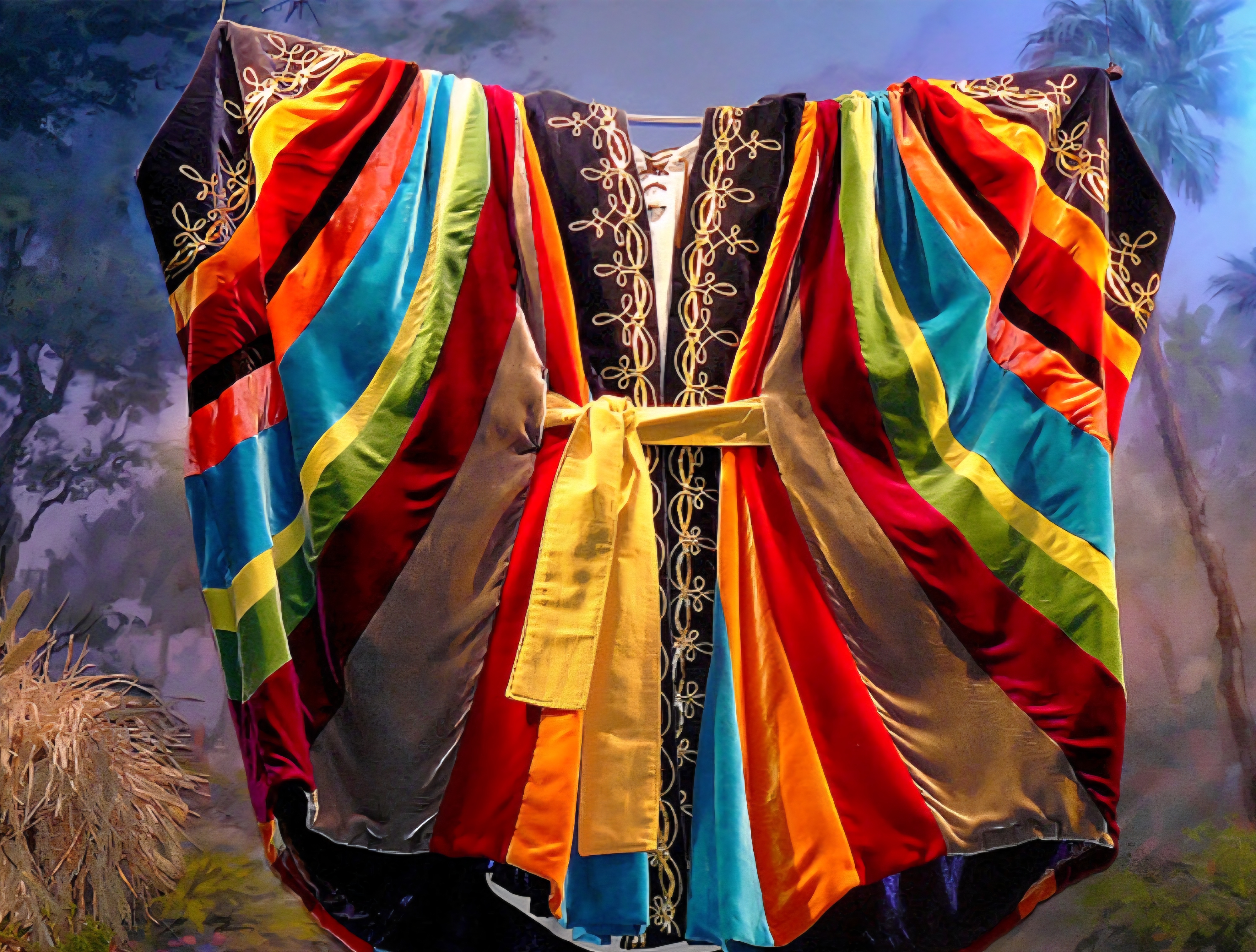
This lectionary reading from the Hebrew scriptures (Genesis 37:1-4, 12-28) recounts the story of Jacob’s favorite son, Joseph; the special garment Jacob gave to Joseph; his brothers’ hatred for him; and the violence committed against him by his brothers when they sold him into slavery. Notice that the Lectionary chose to leave out the part about his lofty dreams that predicted the brothers would become his subordinates. While Andrew Lloyd Webber’s telling of “Joseph and the Amazing Technicolor Dreamcoat” implies that the dreams were the cause of his brothers’ hatred, the text tells us that their hatred of Joseph started before that. Instead, it was their father’s favoritism, and the garment symbolizing it, that stirred things up. This story is nothing like the Broadway musical. This story is queer.
Note: Consider giving a content warning at the start of your worship service, letting congregants know that the biblical text addresses bullying, violence, and trafficking. Give plenty of notice so that people can slip out discreetly prior to the sermon if needed.
Devotional
The phrase Ketonet Passim is found in two different stories in the Hebrew scriptures (the Old Testament). The first time we encounter it is in Genesis 37:
“Now Israel (Jacob) loved Joseph more than any of his other sons, because he had been born to him in his old age; and he made an ornate robe (ketonet passim) for him. When his brothers saw that their father loved him more than any of them, they hated him and could not speak a kind word to him…so when Joseph came to his brothers, they stripped him of his robe—the ornate robe (ketonet passim) he was wearing—and they took him and threw him into the cistern…They took the ornate robe (ketonet passim) back to their father…” (Genesis 37:3-4, 23-24, 32, NIV)
A footnote in the NIV translation tells us that the meaning of the term ketonet passim is “uncertain.” Other translations show signs of a struggle with the term as well.
The CEB translates the term as “long robe” and tells us that the Septuagint (the oldest translation of the Greek bible) used the phrase “many-colored.”
The NRSVUE calls the garment an “ornamented robe” in the text, notes that the Greek uses “coat of many colors,” and says the Hebrew meaning is “uncertain.”
The NASB opts for “multicolored tunic” and indicates in the footnote that it could also be a “full-length tunic.”
The translators – multiple scholars with multiple academic degrees – are essentially telling us, We don’t know what to do with this term. We don’t know what this thing actually is.
Except we do. We do know what it is.
We encounter ketonet passim again in 2 Samuel 13. This passage recounts the horrific story of King David’s son, Prince Absolam, who raped his own sister, Princess Tamar. 2 Samuel 13:17 tells us:
[Tamar] was wearing an ornate robe (ketonet passim), for this was the kind of garment the virgin daughters of the king wore. (NIV)
[Tamar] was wearing a long-sleeved robe (ketonet passim) because that was what the virgin princesses wore as garments. (CEB)
Now [Tamar] was wearing an ornamented robe with sleeves (ketonet passim), for this is how the virgin daughters of the king were clothed in earlier times. (NRSVUE)
Now [Tamar] had on a long-sleeved garment (ketonet passim); for this is how the virgin daughters of the king dressed themselves in robes. (NASB)
We can see that the various translations continue to disagree with the literal interpretation of ketonet passim. What they all agree upon is that the garment was worn by virgin princesses.
And notice this: In the translations I cited, only one remains consistent in translating ketonet passim in both passages.
Genesis 37 (Joseph)
2 Samuel 13 (Tamar)
NIV
ornate robe
ornate robe
CEB
long robe
long-sleeved robe
NRSVUE
ornamented robe
ornamented robe with sleeves
NASB
multi-colored tunic
long-sleeved garment
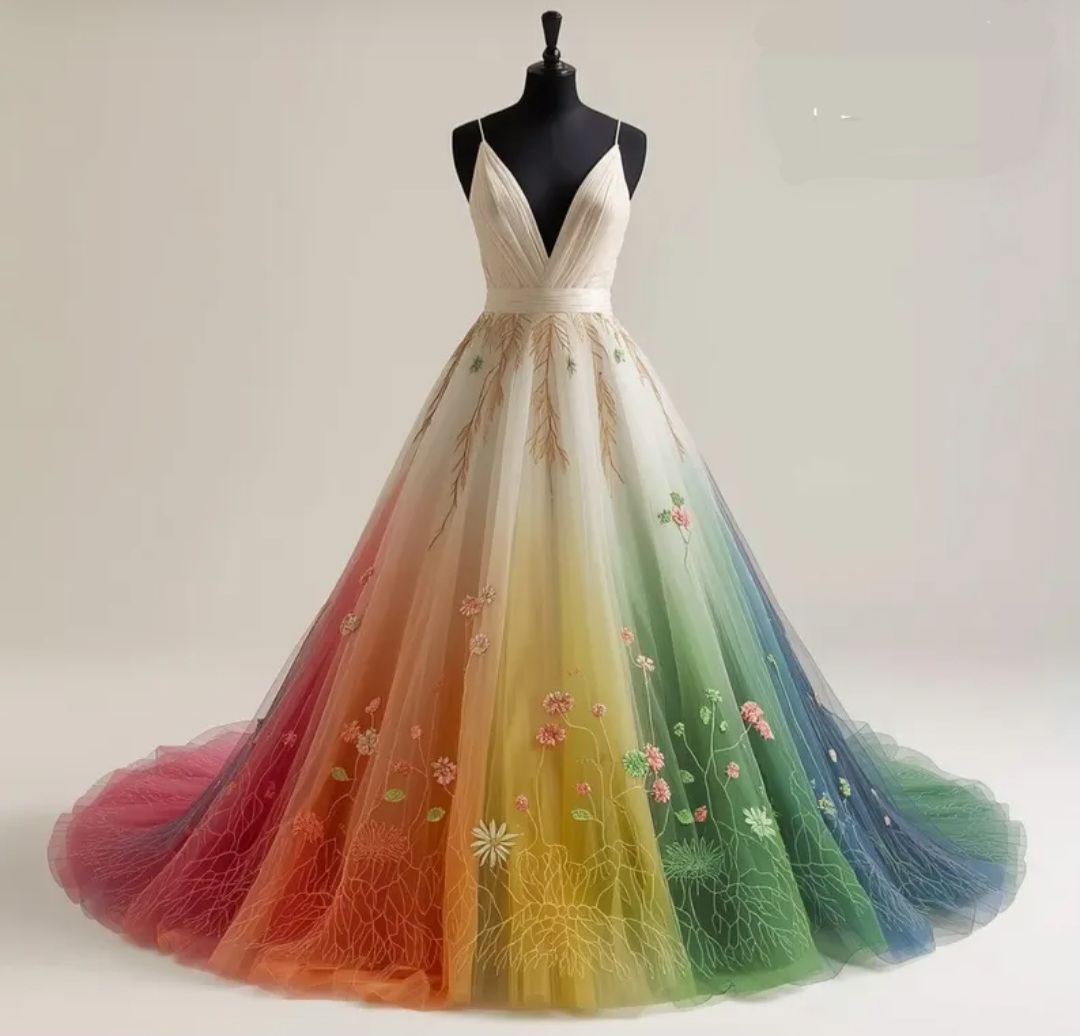
Hebrew Bible translators tell us that translating is an art. It can be difficult and confusing, requiring some detective work. Translators have to make their best guesses based on other clues and context. Undoubtedly, gender was one of those clues. Ketonet passim couldn’t possibly be translated for Joseph the way it was for Tamar, because it would be ludicrous to think that Jacob gifted his son with a princess dress. Or would it? To those looking at gender and sexuality through a heteronormative, cisnormative lens, it may seem ludicrous. But to queer folks, it makes sense. We can find resonance here. Someone in the Bible operated outside of traditional gender norms! Someone in the Bible is like us!
If you plan to preach or write about this lectionary passage, consider the concept of allies:
First, God is an ally, present with us in our suffering.
You will need to tell a bit more of the story than prescribed in the lectionary, because this week’s passage ends on a bummer note: The brothers sell Joseph to merchants who take him to Egypt by force. Next week’s passage (Genesis 45) glosses over Joseph’s hardships in Egypt as he reveals himself to his starving brothers, tells them not to feel bad about what they did to him, and sends them home with food. To see the allyship of God in this story, we need to include Genesis 39, especially verses 21-23.
The lesson that God was with Joseph in his suffering – and is with us in our suffering – resonates with people who have been traumatized by betrayal, bullying, trafficking, assault, and hate crimes; family/domestic violence; or family estrangement. While those things happen to people across all demographics, they happen more frequently to LGBTQ+ people. (Evidence of this is here, here, and here.) We must clearly name that evil and acknowledge the church’s complicity in violence stemming from adherence to religious dogma. We do not want to discount anyone’s pain, but to offer a word of hope in the midst of it.
Second, people who follow in the way of Jesus are called to love our neighbors, which includes being an ally.
Address implicit bias and erasure. The American Psychological Association defines implicit bias as “a negative attitude, of which one is not consciously aware, against a specific social group.” (Find the APA’s full definition here.) In discounting the possibility of Joseph wearing women’s clothing, translators and Bible scholars are showing implicit bias. This bias unwittingly caused them to erase the identity of a gender non-conforming person. Queer people often experience erasure when we are told things like “This is just a phase,” “Bisexuality doesn’t exist,” “You’re just following this trend to fit in,” or “You just haven’t met the right person yet.” Talk about various groups, including the LGBTQ+ community, that are frequently overlooked due to implicit bias. Acknowledge abuse victims who aren’t believed and people of color who experience systemic racism. Challenge your audience or congregation to examine their own biases, as this is critical for those wanting to be good allies.
Third, be an ally to queer people, their families, and close friends in your congregation. Some may come from religious backgrounds that have shamed people for being queer, and shamed parents for supporting their queer children. Jacob gave his queer son a princess dress. What would the parent of a queer child do today to support them?
T-shirt for Jacob
Prayer
O Great Ally, comfort us in our suffering. Forgive us for our callous attitudes that have caused us to mistreat and overlook others. Help us to love one another as you have loved us: To see one another as people created in your image, making our best efforts to understand, to listen, and to do the uncomfortable work of examining our biases. Inspire and empower us to be the ally that someone needs today.
Liturgy
Music
Both hymns listed below are from Songs for the Holy Other which can be downloaded for free. Please use the Donate button on the Hymn Society’s webpage to make a donation if you can.
Composer Sherry K’s lyrics offer reassurance of God’s love for us. I propose a second verse that affirms those who feel erased, overlooked, or invalidated. The new lyrics (composed by me, Jennifer Noricks) are:
I know that God sees me,
I know that God sees me.
I’m not walking alone.
I am seen and I’m known.
Yes I’ll sing:
My God sees me.
This song by Barbara Hamm is especially poignant for those who are estranged from their families. LGBTQ+ people often talk about creating a family of choice when their family of origin has disowned them or proven too unsafe to be around. This may include romantic partners, but could also be close friends, or people they’ve officially or unofficially adopted, or who have adopted them. Hamm’s lovely hymn celebrates families in whatever form they come.
Verse 3 names mothers and fathers and those raising children. If you choose to use those lyrics, specify beforehand that we can each be parent-like figures to people we have not birthed. Given the existence of non-binary parents who find that neither “mother” nor “father” accurately describe them, I prefer to use my adaptation of verse 3 instead:
God bless all the parents and children today Help us to be people who walk in God’s way To care for each other as children of God Whose love is inclusive, far-reaching and broad.
Sermon Illustration
Allyship in The United Methodist Church: United MethodistBishop Julius C. Trimble’s statement urges the church to support the rights and freedoms of transgender people. Using his platform to advocate for others is an example of allyship.
Art
Ordained MCC minister Kittredge Cherry has gathered visual art, blog posts, and books on the topic of Joseph’s queerness.
Author and spoken word artist J Mase III recites an original work, “Josephine,” which claims the story of Joseph’s queerness as inspiration for their own life.
Sending Forth
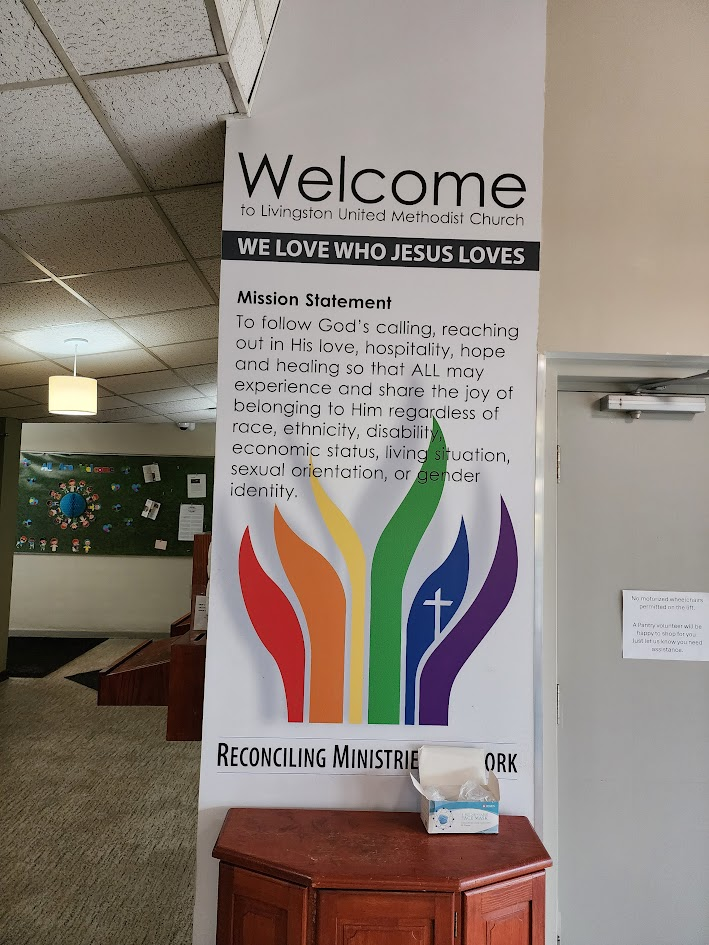
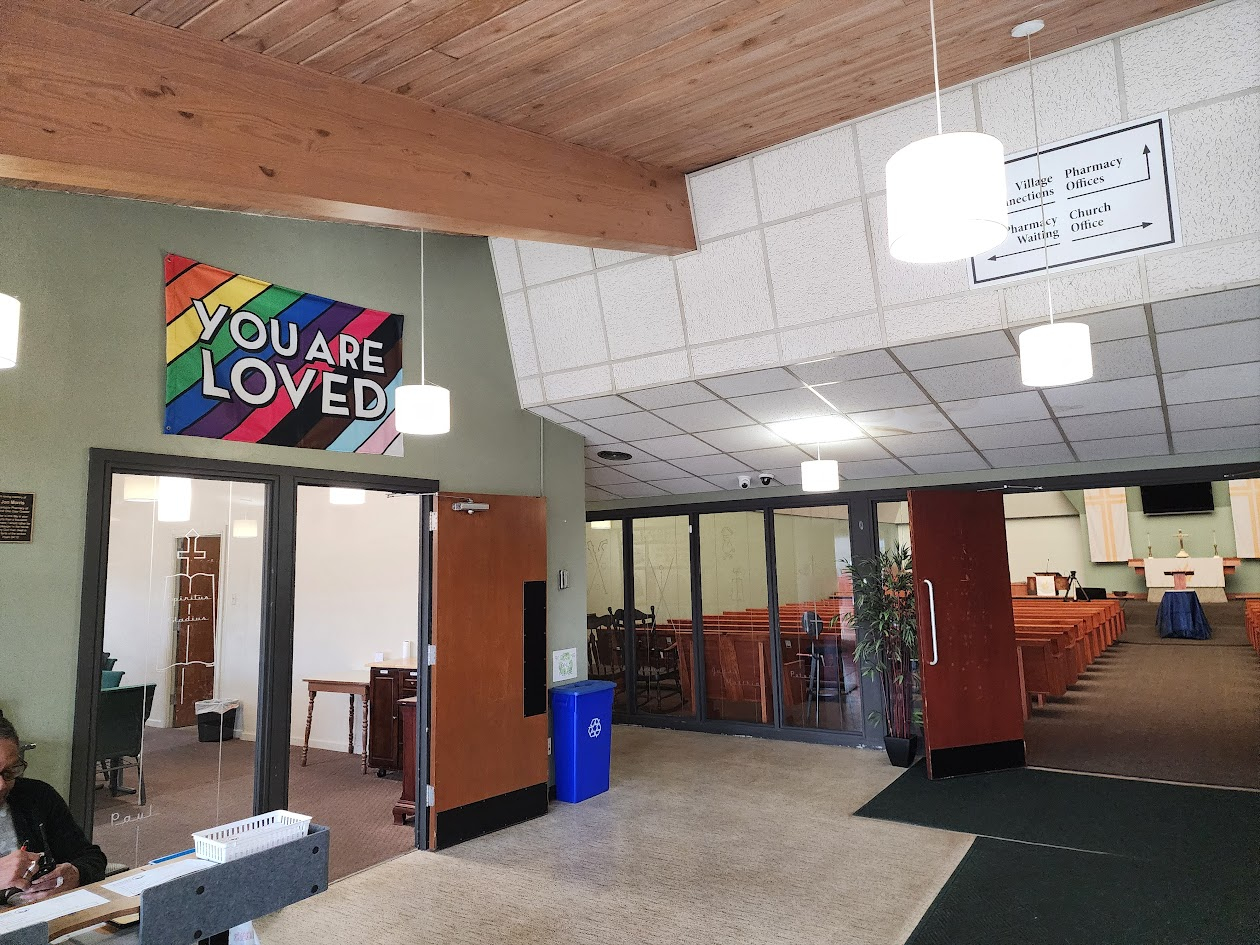
End your service by inviting your congregation to embody allyship. If – and only if – your church allows non-celibate queer people to become members and to serve the church both as laity and clergy, make your allyship known in your community. There are queer followers of Jesus who want to be part of a faith community but are afraid of what bigotry they may find when they start looking. Churches, make the first move! Participate in Pride events, either individually or as a congregation. Partner with local organizations that support and advocate for the LGBTQ+ community. Celebrate Pride month (June) in your worship services. Provide visual cues on your website and on your property that make your allyship clear.
These banners are displayed in the lobby at Livingston United Methodist Church in Columbus, Ohio. They are immediately visible to visitors as they enter the building. Click here to see Livingston’s website, where a logo denoting their affiliation with Reconciling Ministries Network is easy to spot.
Deep Dive: Just How Queer Was Joseph?
The ketonet passim exegesis may be new to some pastors and congregations, but queer and queer-affirming theologians have been talking about it for a while. If your congregation is ready for further exploration, we have more evidence of Joseph’s queerness:
Did you ever wonder why Jacob adopts Joseph’s two sons in Genesis 48? Episcopal priest and Hebrew Scripture scholar Rev. Dr. Wil Gafney says it’s because “it was not credible that he [Joseph] fathered the children his wife gave birth to.”4 They had to be adopted by Jacob to ensure that Joseph’s line would continue.
Rabbi Danya Ruttenberg reviews Biblical and later Jewish readings that offer further insights into Joseph’s story. A Christian congregation devoted to the Bible as its only sacred text may not embrace Midrashic discussion, but Ruttenberg’s study of terms used to describe physical appearance in Genesis, Esther, and 1 Samuel is fascinating. Scripture describes Joseph as “pretty” in words that are similar to, or the same as, its descriptions of several women, including Rachel and Esther. Joseph “is the only even remotely male-coded character in the Bible to be described in these terms.” 5
Rev. Dr. Elle Dowd (she/they), an ordained minister in the ELCA, gave a sermon that paints a vivid picture of Joseph’s experiences as a gender non-conforming person that resonates with and serves as inspiration to other gender non-conforming people.6
United Methodist pastor Rev. Robb McCoy states, “ Joseph…stays home while his brothers go out in the field…he defied gender roles. The subtext of the story is that his brothers resented him not only for being favored, but for being gender queer. This explains their hatred of him so much better.” McCoy also points out, “There are other times [in] Scripture when ornate clothing is described. A Bible lexicon program pointed to Psalm 45, Ezekiel 16, and Judges 5:30 as [phrases similar to ketonet passim]. Each time, it is used in reference to a royal virgin girl.”7
There are queer followers of Jesus who want to be part of a faith community but are afraid of what bigotry they may find when they start looking. Churches, make the first move!



Leave a comment